Watch the Voltage, Not Just the Crash Rate: Battery Telemetry as an OTA Rollout Gate
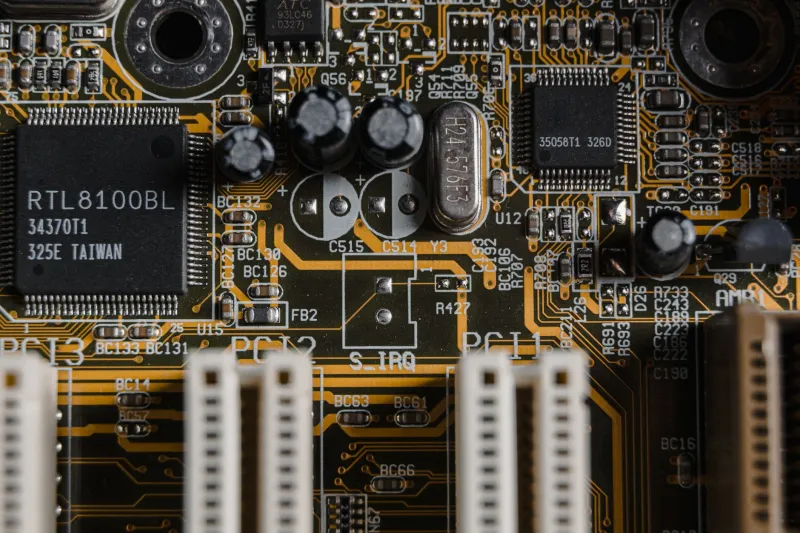
Photo: battery voltage telemetry circuit board firmware testing, via get.pxhere.com
Why Crash Rates Lag Power Failures
A firmware rollout controller typically watches the obvious signals: crash rate, reboot loops, check-in success, and post-update error codes. Those signals are necessary, but they are late. A build that mismanages power can degrade a battery for hours or days before the device stops checking in. By the time the crash rate rises, the canary cohort may already have suffered damage that a rollback cannot undo.
Battery-powered devices give engineers an earlier warning. Voltage sag under transmit bursts, abnormal charge-cycle consumption, rising cell impedance, and thermal excursions can all change before a device goes offline. For a fleet of sensors, wearables, asset trackers, or handheld terminals, power telemetry is not a nice-to-have dashboard. It is a rollout gate.
The Signals Worth Instrumenting
Not every battery metric is useful for OTA gating. The goal is to detect a firmware-induced change in power behavior, not to build a full battery laboratory on every device. Start with a small set of signals that are cheap to collect and stable enough to compare across builds.
Measure pack voltage and cell voltage at a known load, such as during a radio transmit burst or a display wake. Record charge cycles, coulomb-counter state of charge, and, where the fuel gauge supports it, state of health. Capture reset reason and brownout flags, because a firmware build that draws too much current during boot will leave a trail there. Add board temperature and battery temperature at the same sampling points.
The most valuable metric is often a delta, not an absolute value. Compare voltage sag under a fixed workload before and after the update. Compare charge consumed per hour of normal operation. Compare thermal rise during the first ten minutes after boot. A canary device that suddenly sags 200 millivolts more under the same transmit profile is telling you something that a crash counter will miss.
Turning Battery Health Into a Canary Score
Raw telemetry is noisy. A cold snap in Minneapolis or a warehouse in Phoenix can move voltage and temperature without any firmware fault. The rollout controller needs a normalized score, not a raw threshold on a single reading.
Build a baseline from the pre-update period for each cohort. Then compute a post-update delta for the signals that matter: voltage sag under load, energy per successful check-in, charge-cycle consumption per day, reset-to-brownout ratio, and thermal rise during boot. Normalize by device model, battery age, and ambient temperature where sensors allow. The result should be a small set of per-cohort indicators that a deployment engineer can read without a battery chemistry degree.
A practical gate works on rates and distributions. If the canary cohort shows a statistically meaningful increase in brownout resets, or if the lower quartile of pack voltage under load falls below the pre-update baseline by a defined margin, pause expansion. Do not wait for devices to disappear from the fleet. The point of the gate is to act while the devices are still reachable.
Wiring It Into the Rollout Controller
The rollout controller should treat battery telemetry as a first-class canary metric, alongside crash rate and check-in success. That means the OTA backend must ingest power telemetry with release ID, cohort ID, device model, and firmware version. Without those dimensions, the data cannot answer the only question that matters: did this build change power behavior for this population?
Set the controller to evaluate battery indicators at fixed checkpoints during a staged rollout. For example, evaluate after one hour, six hours, and twenty-four hours in the canary cohort. Use a control group that remains on the previous build so that seasonal or environmental drift does not masquerade as a firmware regression. If a battery indicator crosses its pause threshold, halt expansion automatically and notify the release owner. Keep the canary running long enough to distinguish a transient from a trend.
Hysteresis matters. A single device with a failing battery should not freeze a fleet-wide rollout. Require a minimum sample size and a sustained deviation across multiple evaluation windows. At the same time, do not let a low sample size hide a real problem: if the canary is small, extend the observation period before expanding.
Thresholds, Hysteresis, and False Alarms
Battery telemetry is sensitive to things firmware cannot control. Battery age, temperature, charging habits, and radio environment all move the numbers. The first version of a battery gate should be conservative in the direction of caution but not so brittle that every rollout pauses.
Define thresholds in terms of both magnitude and persistence. A five percent increase in energy per check-in might be acceptable; a fifteen percent increase sustained across two evaluation windows is a reason to stop. Pair each threshold with an owner and a documented exception process. If the release owner can waive a battery alert without recording why, the gate becomes theater.
Also separate device-level alerts from cohort-level gates. A device that reports an abnormal battery reading can be flagged for service. A cohort that shows a shift in the distribution needs a rollout decision. Mixing the two creates noise and erodes trust in the controller.
A Playbook for the First 24 Hours
During the first day of a canary, watch the power signals that respond fastest: boot current, transmit sag, and brownout resets. These are the early indicators of a build that is fighting the power budget. Over the next several days, watch charge consumption and thermal behavior for slower regressions. If the build passes the battery gate and the traditional crash gate, expand the rollout in controlled steps.
The battery is often the first component to notice a firmware mistake. Treat its telemetry as a canary signal, wire it into the rollout controller, and you gain hours of warning before the fleet goes quiet.