Midnight Is Not a Time Zone: Scheduling OTA Updates Around Real Human Schedules
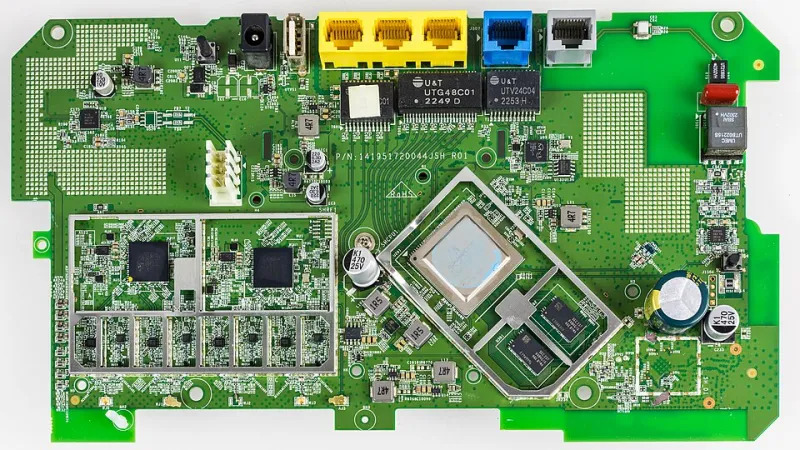
Photo: Raimond Spekking, CC BY-SA 4.0, via Wikimedia Commons
The default advice for OTA scheduling has been repeated so often it borders on folklore: push updates overnight, when users are asleep and the fleet is idle. It sounds airtight until you look at a map. Your 3AM in San Francisco is 6AM in Boston, mid-morning in Berlin, and prime evening use in Sydney. For a US-wide fleet — let alone a global one — there is no single quiet hour. There is only a distribution of them.
And even within a single time zone, "asleep" is an assumption your firmware has no business making. Roughly 15 million Americans work non-daylight shifts, per Bureau of Labor Statistics figures. A nurse finishing a twelve-hour night shift may be a doorbell camera's most active user at exactly the hour your rollout window opens. A CPAP machine, if your product category touches one, is definitionally in use at 3AM. The quiet-hours problem is not a scheduling detail; it is a correctness constraint.
Idle Is a Device Property, Not a Fleet Property
The first mental model to discard is fleet-level idleness. A well-instrumented device reports its own idle state far better than any cron expression can approximate it. A video doorbell knows when its chime last fired and when motion events last occurred. A smart thermostat knows when it last left its setback schedule. A sensor node knows its reporting cadence.
The practical shift is from time-based to state-based update eligibility. Instead of "install at 02:00 local time," the rule becomes "install when the device has been idle for N minutes, it is within the user's acceptable window, and the local clock says it is a socially reasonable hour." The first two conditions are device-side; the third is a guardrail, not a trigger.
State-based eligibility also self-corrects across time zones with zero configuration. A device in Honolulu and a device in Miami converge on the same behavioral rule without your servers ever computing a UTC offset.
User-Declared Quiet Hours: Making the Constraint Explicit
Some teams try to infer quiet hours from usage telemetry — a defensible heuristic, but an inference nonetheless. The more robust pattern is to let the user declare a window and treat it as a hard constraint, not a preference.
This mirrors the Do Not Disturb conventions US users already understand from iOS and Android. The implementation contract matters more than the feature checkbox:
- Default window, explicit override. Ship with a sane default (say, 01:00–05:00 local), but let users widen or narrow it. A user who works nights can declare 09:00–13:00 instead.
- Hard, not soft. A declared quiet window must gate installation the same way a signature verification does. "Soft" quiet hours that yield to a forced rollout train users to distrust the setting.
- Defer, don't drop. If a pending critical update sits through every declared window, escalate honestly: notify the user, show the security rationale, and offer a one-tap "install now" rather than silently overriding.
The defer-don't-drop path deserves emphasis. Security patches create genuine tension with quiet hours, and pretending otherwise produces either angry users or unpatched fleets. A visible countdown — "this security update will install Thursday unless you reschedule" — resolves the tension with consent rather than cleverness.
Overlap-Free Windows and the Math of Staggered Rollouts
Once eligibility is device-local, the server-side problem changes shape. You are no longer scheduling a fleet; you are gating a stream of devices that become eligible at unpredictable moments. Progressive deployment still applies, but the cohort mechanism shifts from time slices to eligibility order.
A few operational notes from practice:
- Rate-limit the eligible stream, not the clock. If 400,000 devices become idle within the same four-hour band across time zones, your update infrastructure sees a ramp, not a spike. Throttle by install confirmations per minute rather than by release time.
- Watch the weekend skew. Residential device usage patterns differ sharply Saturday versus Wednesday. Idleness thresholds calibrated on weekday telemetry will misfire on weekends.
- Hold back a canary cohort by device, not by time. Your early rollouts should include devices from every time zone and usage profile, so a regression surfaces before it reaches any single region's quiet window en masse.
When the Device Never Sleeps
Some hardware has no idle state at all. Industrial sensors, always-on cameras, and medical-adjacent devices run continuously by design. For these, the quiet-hours question inverts: instead of finding a window, you negotiate an interruption budget.
Dual-bank flash layouts and A/B partition schemes let the download and verification happen invisibly, deferring only the activation reboot. The remaining question — when may we restart? — is a product decision, and for a subset of devices the honest answer is "only during a scheduled maintenance window the operator controls." OTA systems that support a maintenance-required flag, distinct from quiet hours, handle this class cleanly.
Design for the Person Holding the Device
The through-line in all of this is that OTA scheduling is ultimately a human-factors problem wearing a systems hat. "When the fleet is idle" is a server's view of the world. The device's view — and the user's — is local, contextual, and occasionally inconvenient.
Engineer the pipeline so that the update arrives whenever bandwidth and safety allow, but activation waits for a moment the user would call reasonable. That discipline costs little at design time and is nearly impossible to retrofit after a bad 3AM press cycle.