Shipping Into the Void: OTA Design for Devices Owners Forgot They Own
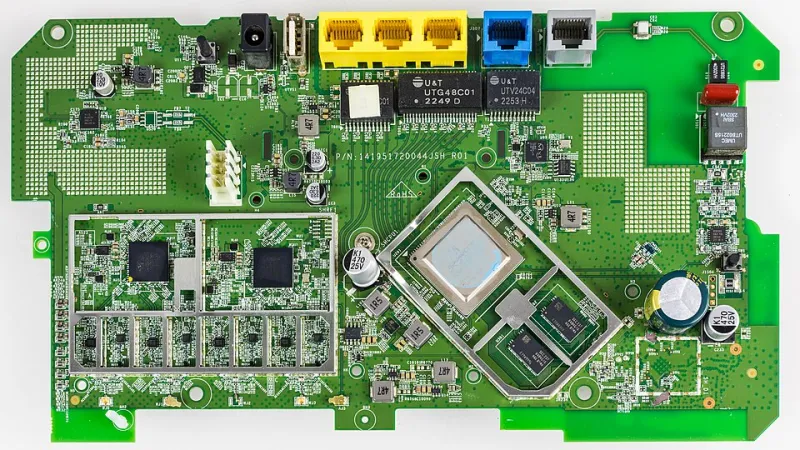
Photo: Raimond Spekking, CC BY-SA 4.0, via Wikimedia Commons
Walk through any American home and you'll find them: a smart plug behind the couch, a Wi-Fi thermostat in a rental unit the owner hasn't visited since March, a garage door controller whose app was deleted during a phone upgrade. These devices are powered, connected, and utterly abandoned. Industry engagement data has said this for years — the median consumer opens their IoT companion app a handful of times in the device's entire life, then never again.
And yet most OTA architectures are designed as if the opposite were true: as if there's a person on the other end, watching, approving, choosing "Install Tonight." There isn't. If your update strategy depends on user engagement, your strategy depends on nothing.
The Consent Fiction
The industry's standard pattern — device notifies, user taps accept — is, for the forgotten-device fleet, a consent fiction. It provides the appearance of user control while ensuring that a large fraction of devices never receive security fixes. The owner who deleted the app two years ago has not declined the update. They have simply ceased to exist as far as your pipeline is concerned.
I'd go further: for most consumer device categories, the prompt-and-wait model is the less ethical option. It converts user indifference into a permanent vulnerability exposure, then lets everyone involved pretend the user made a choice.
The defensible position is this: consent to update is granted at purchase, in the terms the customer actually read (or reasonably should have been able to read), and the pipeline's job is to honor that grant responsibly. Everything else follows from there.
Silent Windows and the Courtesy Curriculum
Assuming total indifference doesn't mean updating recklessly. It means the pipeline absorbs responsibilities the absent user can't. Three policies worth adopting:
Silent update windows. Define per-device-class maintenance windows — say, 2:00 to 5:00 a.m. local time, inferred from usage patterns rather than a timezone setting the user never configured. A smart bulb that flashes firmware at 3 p.m. while someone is home is a support ticket; the same update at 3 a.m. is invisible. Devices with physical actuation — locks, garage doors, heaters — get stricter rules still: never update while the device is in an active safety-relevant state, regardless of window.
Bandwidth courtesy. A forgotten device sitting on a family's network has no right to consume their data cap. Delta updates are the baseline (a 40KB diff beats a 4MB image on any metered connection), but courtesy goes further: defer large transfers when the network looks congested, cap off-peak transfer rates, and never pull more than a small fixed budget per day on connections that resemble cellular failover.
The no-surprise guarantee. Silent installation demands that the device behave identically after the update. If a firmware change must alter user-visible behavior — a new indicator pattern, a renamed button — that change should ship separately, announced, not smuggled in with a security patch nobody saw.
Disclosure for the Disengaged
Critics will call silent updating a transparency problem, and the criticism deserves a real answer rather than a shrug. Transparency for a disengaged audience can't live in the app the user deleted. It has to live in three places:
- At purchase. Clear, plain-English disclosure on the box and in onboarding: this device updates automatically, here's how to opt out, here's where update history lives.
- At the device. A physical or app-recoverable way to see the current firmware version and last update time. Regulators, including the FCC in its cybersecurity labeling work, are pushing exactly this kind of verifiable transparency.
- In the paper trail. A public changelog and a documented update policy. If a journalist or a customer's lawyer asks what changed and when, the answer should be a URL, not a discovery process.
Notice that none of this requires the user to do anything. That's the point. Disclosure designed for engaged users is marketing; disclosure designed for disengaged users is architecture.
Reliability Is the Real Consent
There's a final argument, and it's an engineering one. Silent, automatic, conservatively-windowed updates are the single most powerful reliability tool a fleet operator has. Vulnerabilities get patched in days instead of never. Bug fixes reach the devices that need them. Fleet-wide metrics improve because the fleet actually converges on current firmware instead of fragmenting into a museum of versions.
Designing for the forgotten device isn't cynical — it's honest. The user's indifference is a fact about the world. Pipelines that acknowledge it, respect the household's bandwidth and sleep, and disclose everything they do are more trustworthy than pipelines that ring a notification bell into an empty room and call it consent.
Ship into the void. Just do it courteously, and write down what you shipped.