When the Signing Key Walks Out the Door: Cryptographic Discipline for OTA Pipelines
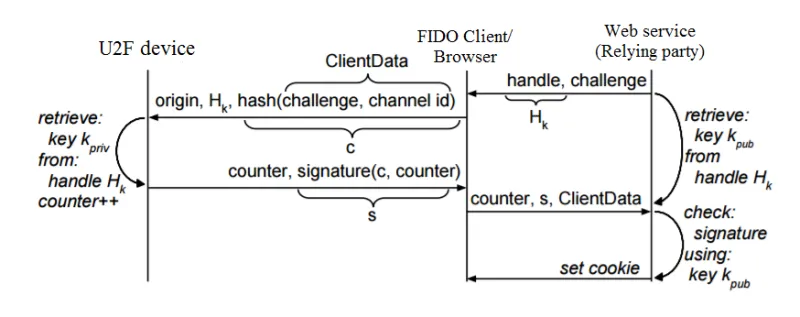
Photo: Pavelllm, CC BY-SA 4.0, via Wikimedia Commons
Every device that accepts an over-the-air update is, by design, a machine that runs code sent over a network. That is the entire value proposition of OTA — and also its single largest liability. The cryptographic signature on a firmware image is not a compliance checkbox. It is the load-bearing wall of your entire security model, and most pipelines treat it like an afterthought bolted on at the end of CI.
What an Unsigned Pipeline Actually Costs
The 2020 SolarWinds intrusion made supply-chain compromise a boardroom topic in the United States, but the firmware world had its own warnings long before. In 2018, researchers demonstrated that certain consumer routers accepted images validated only by a hardcoded MD5 hash — trivially forgeable. The result was botnets like Mozi and Mirai variants that persist precisely because vendors shipped update mechanisms attackers could reuse.
An unsigned or weakly verified update path inverts your threat model. You no longer need to worry only about attackers exploiting the running firmware; you must assume they will eventually try to become the update server. If your device trusts any image that arrives over TLS from a domain you control, then a single certificate mis-issuance, a compromised build runner, or a phishing incident against your release engineer converts into persistent code execution across every device you have ever shipped.
Anatomy of a Proper Verification Chain
A defensible OTA pipeline verifies at multiple layers, and the weakest one defines your posture:
Transport security is not firmware security. TLS protects the delivery channel, nothing more. An image fetched over HTTPS can still be a malicious image that passed through a compromised build machine.
Sign the manifest, not just the payload. Your update manifest should carry a detached signature over a canonicalized structure containing the image hash, target version, hardware identifier, and anti-rollback counter. Signing only the binary leaves metadata — the fields that tell a device what to install — open to manipulation.
Verify in the bootloader, not the application. If your updater process validates the image and then writes it to flash, an attacker who compromises the running application can skip the check. Secure boot means the earliest mutable stage verifies the next stage before handing off control. On MCU-class hardware this typically means leveraging the ROM bootloader's key slots and a properly configured option-byte or eFuse region.
Enforce anti-rollback. Store a monotonically increasing version counter in write-once storage. Without it, a validly signed old image with a known vulnerability can be force-fed to a device years later — the downgrade attacks documented against several automotive and IoT platforms.
A/B Verification and Threshold Signatures
A/B (seamless) update schemes give you a cryptographic and operational gift: the pending image can be fully verified — signature, hash, and even a staged boot self-test — before the device commits. If verification fails, the fallback slot boots untouched. This turns a bad signature check from an unrecoverable brick into a rejected update.
For organizations worried about a single signing key as a point of failure, threshold signatures (such as Schnorr-based schemes or TUF's delegated roles) require k of n keys to produce a valid signature. The Uptane framework, developed for automotive and now seeing adoption in industrial IoT, applies this pattern with a separation of duties between an offline root of trust and online signing roles — so a compromised build server alone cannot mint a valid release.
The Leak Scenario: Rotation Under Fire
Here is the exercise every team should run as a tabletop drill: your signing key appears in a public repository, pushed by a contractor nine months ago. What happens in the first hour?
- Can you revoke trust in the leaked key on devices already in the field? If the public key is baked into the bootloader with no update path, the answer is no, and every device you have ever shipped is compromised until hardware replacement.
- Do you maintain an offline root key, with intermediate release keys rotated on schedule? If so, rotation is a routine operation: publish a new manifest chain signed by the root, and devices adopt the new key on their next update.
- Can you distinguish your legitimate releases from attacker-minted ones during the window between leak and rotation? Version counters, signed timestamps, and anomaly detection on your update server's egress logs matter here.
Teams that survive this scenario design for it: offline HSM-backed root keys, short-lived release keys, and a bootloader that can be re-keyed exactly once through a signed key-update manifest. Teams that don't discover the difference between key rotation and key revocation the hard way.
A Pre-Regulator Audit Checklist
Whether the impetus is the EU Cyber Resilience Act's upcoming obligations for products with digital elements, or simply an enterprise customer's procurement questionnaire, the audit questions are converging. Before an attacker or an assessor asks them first:
- Where do signing keys live, who can access them, and is that access logged?
- Is any stage of the pipeline capable of producing a signed image without human approval?
- Does the device verify in the bootloader, with anti-rollback enforced?
- Is there a tested, documented procedure for rotating keys — including the bootloader root?
- Can you produce, per release, a signed manifest linking image hash, version, and hardware target?
- Have you rehearsed the leaked-key scenario in the last twelve months?
None of this is exotic cryptography. It is hygiene, process, and the willingness to treat your signing infrastructure with the same seriousness as your production database credentials. The signature on a firmware image is the last line of defense between your engineering organization and a headline. Sign every byte, verify it in the right place, and rehearse the day it fails.