Your Update Server Is Not a Backend: Raising the Bar for OTA Infrastructure

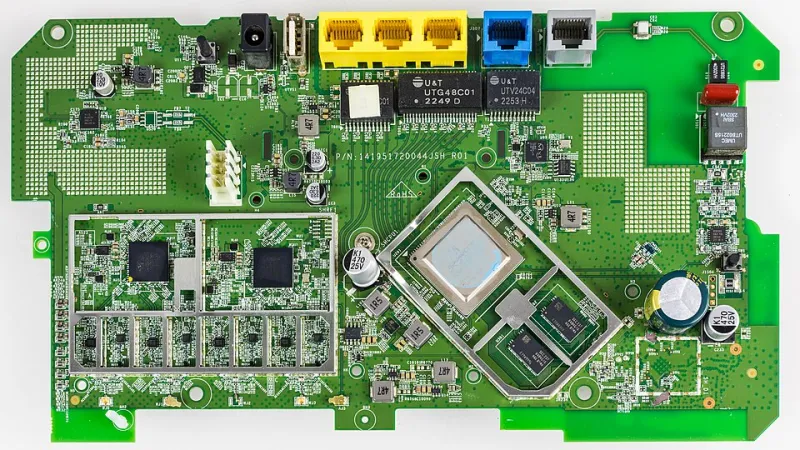
Photo: CEphoto, Uwe Aranas, CC BY-SA 3.0, via Wikimedia Commons
Here is a pattern we see across the industry, from seed-stage hardware startups to teams shipping millions of devices: the OTA update system is a web server. It serves a JSON file. Devices poll it, compare versions, download a binary. Someone added it in a sprint. It has a README that says "do not touch."
This is a category error, and it's worth being blunt about why.
The Update Server Is the One Service You Cannot Restart
A typical backend outage is painful but recoverable: you redeploy, traffic shifts, incident over. The update server has a property no other service in your stack has — its failure mode can be unrecoverable by design. If a malformed manifest, a truncated artifact, or a buggy check-in endpoint reaches devices in the field, your remediation path runs through the broken system. You are asking the update infrastructure to fix the update infrastructure, for devices that may be behind firewalls, on cellular networks, or powered off for the weekend.
A web backend degrades and recovers. A bad OTA rollout can degrade permanently. That asymmetry demands a different engineering posture — closer to how we treat build pipelines and artifact registries than how we treat CRUD services.
What First-Class OTA Looks Like
If we hold update delivery to the standard of a mature delivery pipeline, four requirements follow.
Versioned, immutable artifacts. An update binary is an artifact with a content hash, a build provenance record, and an immutable identity. It is never overwritten in place. If a device reports running 2.4.1, that string must mean exactly one set of bytes, forever. Teams that allow artifact mutation create a debugging nightmare where the field and the lab are running different software under the same version string.
Signed manifests, verified on device. The manifest is the contract between fleet and device: which version, what hash, what conditions. It should be signed, and verification should live in the device bootloader or update agent — not in application code that the update itself might replace. Trust anchored below the update mechanism is what makes a compromised server an inconvenience rather than a fleet-wide compromise.
Staged environments, including a production one. Most teams have staging for their web tier and nothing for their update path. A first-class OTA system has its own environments: a synthetic fleet that exercises manifests and patch application, a canary cohort in production, and progressive waves with automated health gates between them. The gate criteria should be as explicit as your CI checks — crash-free rate, successful boot verification, update completion percentage — because "it looked fine on my desk" is not a deployment strategy.
Observability on the delivery path itself. You instrument your API; you should instrument your update funnel with the same rigor. Devices that checked in, devices that downloaded, devices that applied, devices that verified, devices that reported back — each stage is a funnel step, and drop-off at any step is a signal. A device that downloads but never reboots is telling you something. A device that boots but never checks in again is telling you something worse.
The Bolted-On Pattern, Diagnosed
Why does the web-server pattern persist? Because it works, right up until it doesn't. A static JSON file on an S3 bucket genuinely does deliver updates. The failure is not in the happy path — it's in everything adjacent to it:
- No atomicity guarantee when a device loses power mid-flash.
- No rollback target when the new image fails to boot.
- No record of which cohort received which build, or when.
- No way to test the manifest logic without shipping it to real hardware.
Each of these is invisible during development and catastrophic at scale. The bolted-on system optimizes for the 99% of updates that go fine and leaves you exposed on the 1% that don't — and at fleet scale, 1% is ten thousand support tickets.
A Modest Proposal
You don't need to rebuild anything tomorrow. Start by auditing your current update path against the four requirements above. Most teams find they have artifacts and manifests, partially; staging and observability, rarely. Close the observability gap first — you cannot manage what you cannot see, and the update funnel is almost always the least-instrumented critical path in a hardware company.
Then treat every change to the update mechanism itself with the paranoia it deserves. The code that ships code is the most consequential code you own. It should be reviewed like it, tested like it, and observed like it.
The devices in the field are your customers whether they're in a Chicago apartment or a cornfield in Iowa. The only relationship you have with most of them runs through your update infrastructure. It deserves better than a README that says "do not touch."