Every Rollout Is a Survey: Wiring Device Telemetry Into Your OTA Decision Loop
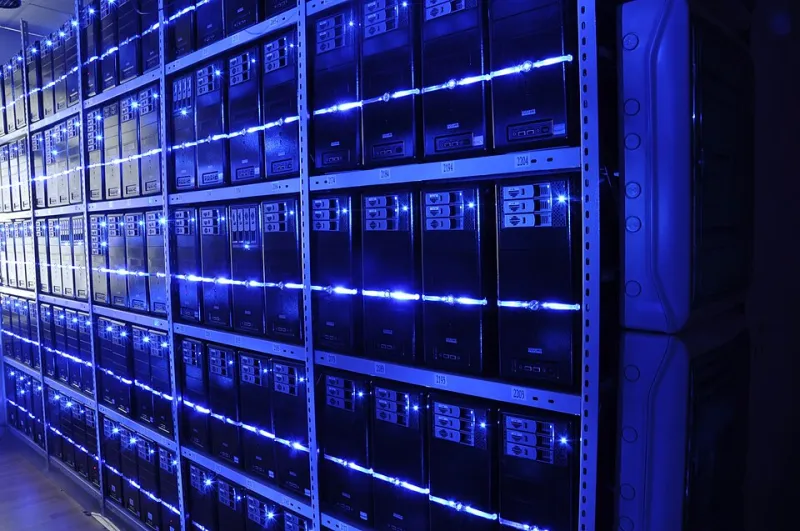
Photo: BalticServers.com, CC BY-SA 3.0, via Wikimedia Commons
A firmware rollout that ends when the last device flashes is a rollout that taught you nothing. The devices in your fleet are, at that moment, the largest instrumented test environment you will ever have access to — and most OTA pipelines let that data evaporate. The update goes out, dashboards go quiet, and the next release is planned from memory and optimism.
The alternative is to treat every rollout as a survey the fleet fills out on your behalf. That requires deliberate engineering: a defined feedback contract, a telemetry path that survives the update itself, and go/no-go gates that consume field signals automatically rather than waiting for a human to notice a spike on a Friday afternoon.
Define What a Device Is Allowed to Say
The first mistake is treating telemetry as an unbounded firehose. Devices on cellular or metered connections cannot afford it, and your backend cannot parse it. Instead, define a narrow, versioned feedback contract that ships with the firmware:
- Health heartbeat: boot count, uptime, free heap, watchdog resets since last report.
- Update outcome: applied version, previous version, install duration, whether the device fell back.
- Failure signatures: a short enum of crash reasons, panic codes, and brownout events — bounded, so a new bug produces a known category, not garbage.
- Anomaly flags: coarse indicators like sensor readings out of expected range, abnormal power draw, or repeated connectivity loss.
Versioning this contract matters as much as versioning the firmware. When release 4.2 introduces a new field, devices on 4.1 should not break your ingestion pipeline. Sign the contract, stamp it with a schema version, and reject anything your parser does not understand.
Telemetry Has to Survive Its Own Update
There is a chicken-and-egg problem hiding in every OTA design: the update mechanism is the one piece of software that must keep working while everything else changes. Your feedback path inherits the same constraint. If release 4.2 has a bug that corrupts the telemetry module, the devices that need help most go silent exactly when you need to hear from them.
Practical mitigations:
- Report before you commit. Have devices send a post-install health snapshot before the bootloader marks the new image as permanent. If the report never arrives, the device is a candidate for automatic rollback.
- Keep a minimal reporter in the immutable partition. Even a few hundred bytes that can emit a panic code over a plain HTTPS POST is worth the flash budget.
- Stagger check-ins. A million devices reporting simultaneously after an update is a self-inflicted denial of service. Jitter the reporting window across hours, not seconds.
Turn Signals Into Gates
Collecting telemetry is table stakes; the differentiator is wiring it into the rollout controller. Define thresholds before the rollout starts, when everyone is calm:
- Rollback rate above 0.5% in any cohort → pause the campaign.
- New failure signature appearing in more than N devices → hold and alert.
- Median boot time or memory headroom degraded beyond X% versus the prior release → flag for triage.
The critical design choice is that these gates compare cohorts, not absolutes. Devices running the new build should be evaluated against devices still on the previous build, over the same time window, in the same regions. That controls for seasonal noise — a heatwave in Texas will spike thermal shutdowns across your entire fleet, and only cohort comparison will tell you whether it is the weather or your firmware.
A Worked Example: 40,000 Thermostats
Consider a mid-size smart-thermostat fleet — roughly 40,000 devices across North America, mostly residential Wi-Fi, checking in a few times a day. The team ships release 7.3, which changes how the HVAC control loop schedules compressor calls.
Under their old process, a regression like this surfaced through support tickets: a few hundred homeowners noticing short-cycling, a week of triage, a hotfix. Time-to-detection: six to nine days.
With a feedback-driven pipeline, the flow looks different. Release 7.3 goes to a 2% cohort on the beta channel. Each thermostat reports its compressor cycle count per day as part of the standard heartbeat. The rollout controller compares cycle counts between the 7.3 cohort and the 7.2 control group, normalized for outdoor temperature (which the thermostats already report).
Within 36 hours, the 7.3 cohort shows a 40% increase in compressor cycles at equivalent outdoor temperatures. No consumer has filed a ticket yet — the anomaly is invisible to a homeowner on day one. The gate fires, the campaign halts automatically, and the two engineers on rotation get a paged alert with the diff already computed. Total time-to-detection: under two days, and zero devices beyond the 2% cohort were ever exposed.
The lesson is not that the telemetry was exotic. Cycle counts and outdoor temperature were already being collected. What changed is that the OTA pipeline was configured to ask a question of that data — and to act on the answer without waiting for a human.
Close the Loop on the Loop
Two closing practices separate teams that do this once from teams that do it every release:
Write the postmortem into the pipeline, not the document. When a gate fires and a release is pulled, the fix should include a new telemetry field or threshold so the same class of regression is caught next time. Your detection system should have its own changelog.
Publish gate outcomes internally. When release 7.4 ships, the release notes should state what the 7.3 cohort revealed and which gates were tuned as a result. This builds organizational trust in automated halts — the hardest part of the whole system is rarely the code; it is convincing leadership that a paused rollout is the pipeline working, not failing.
An OTA update is the cheapest large-scale experiment you will ever run. Design the pipeline so that every rollout hands you the evidence for the next one — and so that the fleet, not the support inbox, is the first place a regression gets reported.