Say Something: Why Your Next Firmware Push Should Introduce Itself
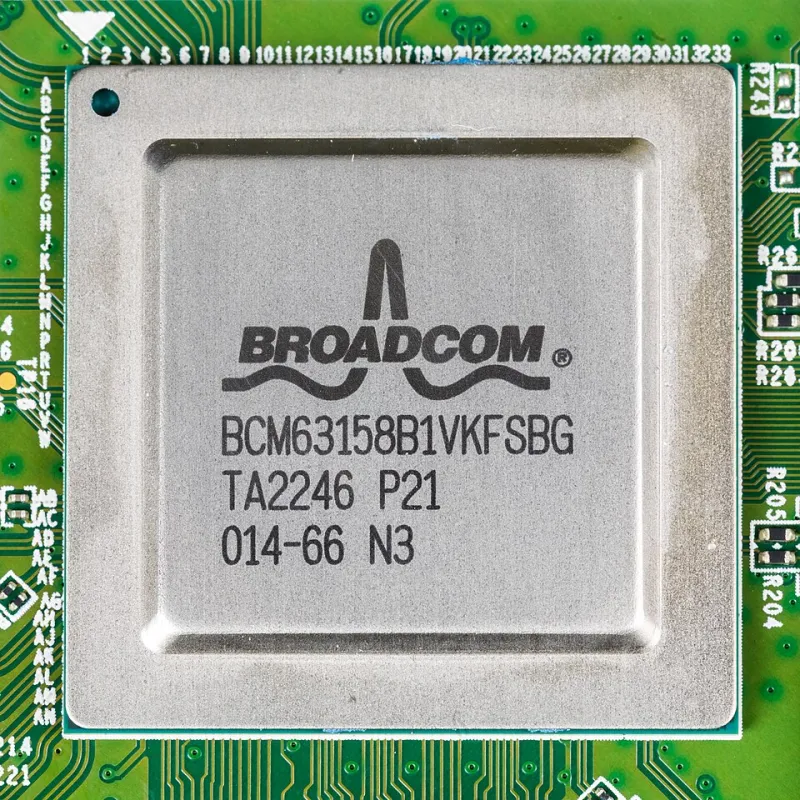
Photo: Raimond Spekking, CC BY-SA 4.0, via Wikimedia Commons
Somewhere in a suburban garage in Ohio sits a smart garage door opener that received a critical security patch eleven months ago. The owner has no idea. The patch worked, the door still opens, and the manufacturer considers the rollout a success. By every metric on the update server's dashboard, this is a win. By any reasonable measure of the relationship between the company and its customer, it is a quiet failure.
The consumer OTA industry has spent a decade perfecting invisibility. We treat silence as the gold standard: no disruption, no questions, no support tickets. But silence has a cost, and it compounds. When updates are invisible, the value of updates is invisible too. And when the value is invisible, the only time a user ever thinks about firmware is the moment it disappoints them.
The Silent Fix Is a Story You're Choosing Not to Tell
There is a well-intentioned culture in embedded engineering of the 'silent security fix' — patch the vulnerability, rotate the credentials, ship it at 3 AM local time, and never mention it publicly lest you tip off attackers. This logic made sense in an era when firmware lived behind a NAT and attackers moved at the speed of conference talks. It makes far less sense now.
Attackers already know about vulnerabilities faster than your legal team approves a disclosure. Meanwhile, your users are left in the dark about a genuine act of care performed on their behalf. The result is a peculiar asymmetry: the company did something valuable, the user experienced nothing, and the next time an update causes a bug — as some inevitably do — the user's mental model of updates is formed entirely by the failure.
You cannot ask customers to trust an update process they have never seen succeed.
What Game Studios Figured Out Decades Ago
Consider how a different industry handles the same problem. When a studio like Blizzard or Riot ships a patch, the release notes are a product in themselves. Players read them the way sports fans read box scores — balance changes, new content, bug fixes, sometimes with personality and humor. Patch day is an event. The update is not maintenance; it is evidence that the product is alive and that someone is paying attention.
Apple and Google have pulled consumer software in the same direction. iOS update screens explain, in plain language, why an update matters. App stores surface 'what's new' text directly to the user before the download begins. The pattern is consistent across every successful consumer software platform: updates that communicate value build a habit of accepting updates, and that habit is what makes emergency rollouts tolerable when the stakes are high.
Firmware teams, by contrast, often ship with a changelog that says 'stability improvements and bug fixes.' That is not communication. That is a shrug rendered in text.
Designing an Update That Introduces Itself
Turning a firmware push into a trust-building moment does not require a marketing department or a rewrite of your update protocol. It requires treating the user-facing surface of the update — the notification, the companion app screen, the email, the LED pattern — as a designed artifact with the same rigor as the binary itself.
A few practices worth adopting:
- Name the update. 'Firmware 4.2.1' is a version number. 'The Range Update' or 'Winter Battery Patch' is a story. Version numbers are for your servers; names are for your customers.
- Quantify the benefit. 'Reduced reconnect time after a Wi-Fi outage from 45 seconds to 8 seconds' is concrete. 'Improved connectivity' is filler. If your telemetry can't produce a number like this, that's a measurement problem worth fixing first.
- Explain the restart. Devices that reboot without warning — a robot vacuum mid-cycle, a thermostat mid-schedule — train users to resent updates. A brief, honest heads-up ('Your doorbell will be offline for about 90 seconds tonight') costs nothing and prevents the most common category of update complaints.
- Own the fix. When a patch addresses a real flaw, say so within the bounds of coordinated disclosure. 'This update hardens how your camera verifies server connections' tells users their security was taken seriously without arming attackers.
None of this changes a single byte of the delta payload. It changes what the payload means to the person on the other end.
The Reliability Argument for Loudness
There is a purely engineering case for this, too, and it lives in the feedback loop. Fleets that communicate updates clearly generate better telemetry in both directions. Users who know an update happened can report 'this started after the patch' instead of 'it's been weird lately.' Support teams can triage faster. Beta channels get meaningful participation because opting in feels like joining something rather than accepting risk.
Silent updates produce silent failures and noisy ambiguity. Legible updates produce legible data.
The instinct to hide firmware from users came from a reasonable place — fear of disruption, fear of confusion, fear of the support queue. But a decade of consumer IoT has demonstrated the opposite risk: devices that update invisibly are devices whose owners never learn to care about them, and devices nobody cares about are the first to end up in a drawer, unpatched and forgotten.
The update that talks back — that says what it did, why it mattered, and what comes next — is not a UX nicety. It is the cheapest reliability investment available, and the only one that compounds into customer trust rather than degrading into it.