Nobody Reads the Release Notes: Rebuilding OTA as a Product Experience

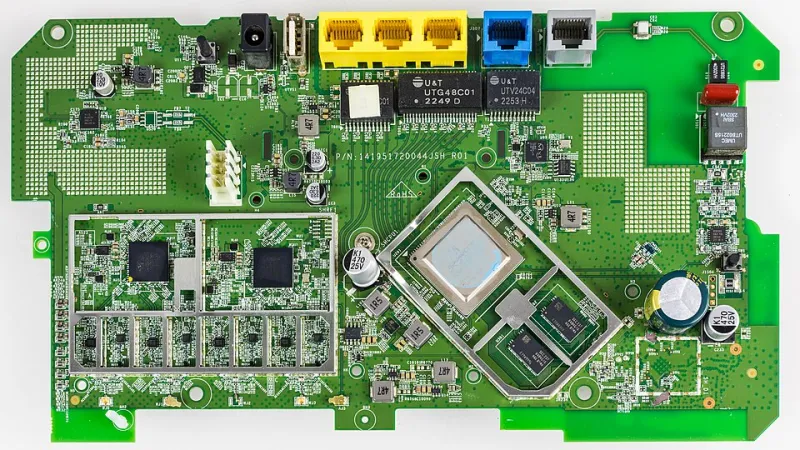
Photo: Jan Vašek, CC0, via Wikimedia Commons
Ask a firmware engineer to define a successful OTA update and you will hear about checksums, rollback slots, and success-rate telemetry. Ask a user, and the definition is simpler: nothing bad happened, and I wasn't surprised. By that second standard, the industry is failing at a scale the checksums never capture.
The uncomfortable thesis of this piece: a large share of what gets logged as update failure is actually UX failure. The device rebooted during dinner. The progress bar froze at 99% for eleven minutes. The error message said "Update failed (0x8007F)" and offered nothing but a power cycle. The mechanism worked; the experience did not. And users respond to bad experiences by doing the worst possible thing — unplugging devices mid-update, refusing consent indefinitely, or returning the product.
The Three Sins of Update UX
The ambush reboot. A smart speaker that reboots mid-alarm, a router that drops Wi-Fi during a work call, an EV that locks its infotainment for twenty minutes in a parking garage. Every one of these is an engineering decision about scheduling that ignored the user's context. The fix is not technical heroics; it is honoring an idle window and deferring aggressively.
The lying progress bar. Firmware engineers know why progress stalls: the image is being verified, the flash write is slow, the device is waiting for a quiet network. Users see a frozen bar and conclude the device is broken — and some of them will pull the power. A bar that hangs at 99% is worse than no bar, because it actively teaches users that interrupting is safe. It is not.
The unactionable error. When an update fails, the user has exactly one question — what do I do now? — and most error surfaces answer a different question entirely. Error codes belong in logs. The screen needs plain language and a single next step.
What Good Looks Like, Device by Device
Smart speakers have largely converged on a pattern worth copying: audible acknowledgment, updates deferred to idle hours, and a physical indicator (light ring) that unambiguously signals "do not unplug me." The consent model is implicit — the device assumes permission but communicates state relentlessly. For low-stakes, always-powered devices, this is defensible.
Electric vehicles demonstrate the opposite end of the consent spectrum. Drivers schedule updates explicitly, see estimated duration, and get a clear statement of what will be unavailable during installation. Tesla, Rivian, and GM all treat the update window as something the owner controls, because a car is not a gadget — it is transportation. The lesson generalizes: the higher the stakes of interruption, the more explicit the consent must be.
Home routers are the cautionary tale. Updates often happen invisibly at 3 a.m., which sounds considerate until you realize a failed flash at 3 a.m. means a household wakes up offline with no one awake to notice. The better pattern — seen in some mesh systems — is a notification-first flow: tell the user an update is ready, let them pick a window, and make the update itself fast with A/B slots so a failure silently reverts instead of orphaning the device.
Four Patterns Worth Stealing
-
Honest progress, including the boring parts. Replace a single bar with staged messaging: "Downloading → Verifying → Installing (this takes about 4 minutes) → Finishing." Time estimates beat percentage points. If a stage can exceed its estimate, say so before it does.
-
Consent proportional to consequence. A firmware patch on a lightbulb can be automatic. An update that disables a garage door opener for ten minutes should never be. Map your update's blast radius and match the interaction model to it.
-
Deferral with a deadline. Let users postpone, but pair every deferral with a clear final date and explain why it exists — security patches expire. Unbounded deferral is how fleets fragment; forced immediate updates are how users develop the habit of interrupting. The compromise is a bounded choice.
-
A failure story, not a failure code. If the update fails, the device should either recover automatically (A/B fallback) or present one sentence of explanation and one action. "We couldn't finish the update. Your device is running the previous version and is safe. Try again tonight?" That sentence resolves more support tickets than any error table.
Reliability Includes Perception
Here is where the UX conversation and the reliability conversation meet: your measured update success rate is not the same as your perceived success rate. A device that updates flawlessly but reboots during a birthday party has a reliability problem as far as the customer is concerned, and customer perception drives behavior — unplugging, blocking, churn.
Instrument the experience, not just the mechanism. Track time-to-consent, deferral rates, and support contacts per release alongside raw completion telemetry. When a release shows a spike in users pressing reset mid-install, that is not a user error; that is your update UX telling you something your flash logs cannot.
The OTA pipeline is a product. Ship it like one.