Subpoena-Proof by Design: Making Your OTA Pipeline Ready for the Day Washington Asks Questions

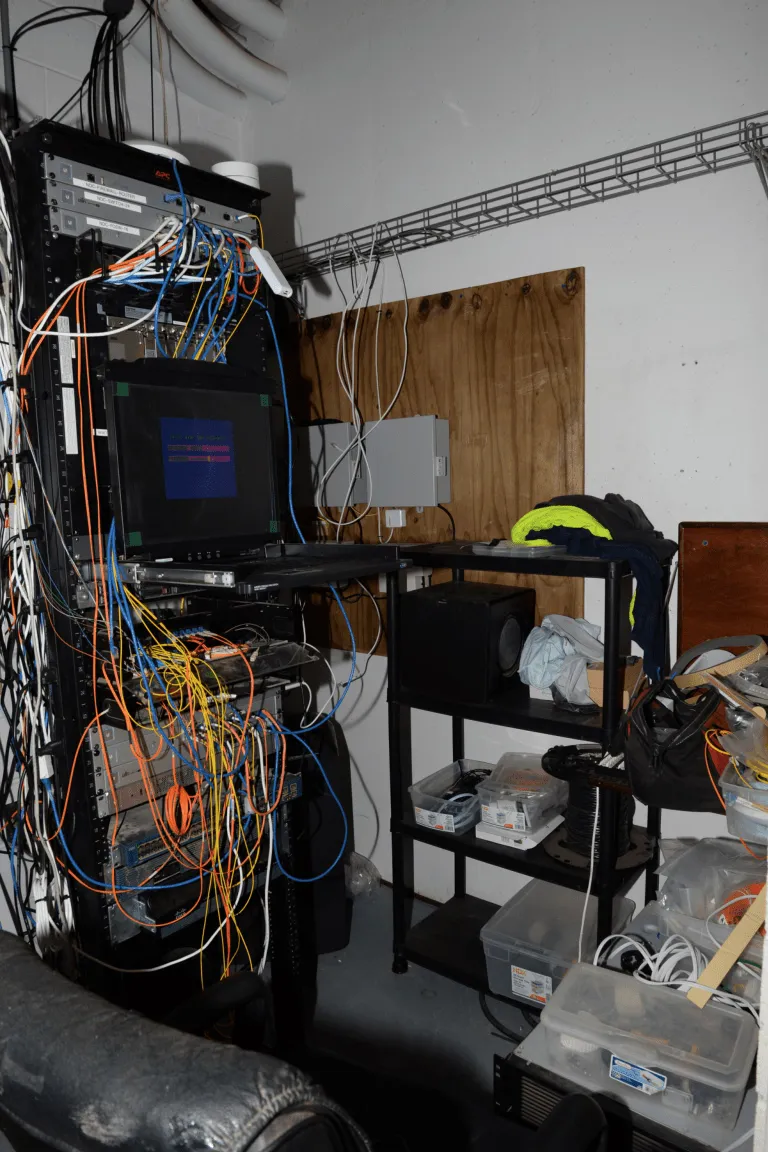
Photo: Globetrotter19, CC BY-SA 3.0, via Wikimedia Commons
Somewhere in a conference room in Washington, a regulator has just asked a very simple question: what exactly was in the firmware running on your devices between March and August of two years ago?
For most engineering organizations, that question triggers a scramble. Git tags that no longer build. CI artifacts purged by a retention policy someone set to thirty days. A Slack thread where the release engineer — now at a different company — describes a last-minute hotfix that never made it into any changelog. Six weeks later, you produce a partial answer, and the regulator writes down that your organization could not account for its own software.
This is not a compliance problem. It is a reliability problem, and it belongs in the same bucket as disaster recovery and incident response. If your OTA pipeline cannot reconstruct its own history, it is not finished.
The Regulators Are Already Looking at Firmware
Connected-device oversight in the United States has shifted meaningfully in the past few years. NHTSA's cybersecurity best-practice guidance for vehicles explicitly contemplates over-the-air update mechanisms, including how updates are validated and how the agency can be informed of safety-relevant changes. The FDA's premarket guidance for cyber devices requires a software bill of materials and a plan for postmarket updates — which, for an infusion pump or a diagnostic device, means the OTA pipeline itself is in scope. The FCC's push on cybersecurity labeling for consumer IoT, and the SEC's disclosure rules for material cyber incidents, extend the pattern: the government increasingly wants to know not just that you shipped software, but what you shipped, when, to whom, and how you knew it worked.
The common thread is accountability for software provenance. And software provenance is precisely what a well-engineered OTA system already produces — if you capture it deliberately.
Immutable Release Records Are the Foundation
The first pillar of an audit-ready pipeline is that a release, once published, is a fact that cannot be silently edited. In practice this means:
Append-only release logs. Every rollout event — manifest creation, signing, campaign start, cohort expansion, pause, rollback — lands in an append-only store. Not a database row that gets updated; an event that gets added. Immutable object storage with object locking, or a log-structured event store, both work. The point is that nobody, including a compromised admin account, can rewrite history.
Content-addressed artifacts. Every firmware image should be identified by a cryptographic hash, and every record should reference that hash rather than a mutable version string. "v2.4.1" is a label; sha256:9f2a... is evidence. When a regulator asks what was in a build, the hash pins the answer.
Signed manifests with verifiable chains. If your update manifests are signed — and they should be — the signature chain itself becomes part of the audit trail. A regulator, or a court, can independently verify that a given manifest was authorized by your signing infrastructure. This is the same machinery that protects your fleet against tampering, repurposed as evidence of your own diligence. Keep your signing keys on hardware security modules, rotate them on a documented schedule, and log every signing ceremony.
Design for Recall, Not Just Rollout
Most OTA systems are optimized for one direction: pushing new software out. Regulators care about the other direction — pulling it back or correcting it at speed.
A recall-ready campaign capability means you can, within hours, target a specific population of devices by firmware version, hardware revision, geography, or cohort, and push either a fix or a reversion. It also means you have already answered the operational questions that come with that: How long does a full-fleet corrective campaign take at your observed check-in rates? What percentage of the affected population is offline for months? Do you have a communication channel to device owners that works independently of the device itself?
Document the answers. When NHTSA opens an investigation, the speed and completeness of your corrective action is part of the record. An OTA platform that can execute a targeted campaign in four hours, with per-device delivery confirmation, tells a very different story than one that needs a week to figure out who is affected.
The Two-Year Question
Here is the scenario worth engineering against: an inquiry about a firmware version you shipped twenty-six months ago. To answer it without panic, you need three retrievable things.
First, the artifact itself. Firmware images and their build provenance — source commit, toolchain, build environment — must be retained well beyond typical CI retention windows. For regulated products, retention periods often run the life of the device plus several years. Archive build outputs to durable storage as a first-class pipeline step, not an afterthought.
Second, the deployment record. Which devices received it, when, through which campaign, and with what observed outcomes — install success rates, post-update telemetry, any anomaly reports. This is where the telemetry work most OTA teams are already doing pays a second dividend: your rollout dashboards double as regulatory evidence.
Third, the decision trail. Why was this change shipped? What testing backed it? Who approved it? This does not require bureaucracy — it requires that your release process leaves a structured record instead of living in someone's memory.
Compliance as an Engineering Artifact
The organizations that navigate regulatory scrutiny well are not the ones with the thickest policy binders. They are the ones whose systems produce the evidence automatically, because the pipeline was designed so that doing the right thing and doing the convenient thing are the same action.
If you take one practice from this article, make it this: run a quarterly drill. Pick a firmware version from eighteen months ago and time how long it takes your team to produce the artifact, the deployment record, and the decision trail. When the drill takes hours instead of weeks, you are audit-ready. When a regulator reads your changelog — and eventually, one will — it will read like the work of a team that had nothing to hide, because it had nothing it couldn't prove.